Major in Geosciences
Geosciences explores Earth's processes, materials, and history; from minerals and fossils to tectonics and climate change. Students who study geosciences gain hands-on skills in observation, analysis, and problem-solving, preparing them to tackle challenges in resource management, environmental stewardship, and scientific discovery.
Students majoring in Geosciences pursue careers in exploration, research, resource management, and environmental assessment, either in industry, government, education, or as independent investigators. Whether studying the Earth's deep past or today's environmental challenges, geosciences prepares students to make an impact on global and local issues.
Awarded in scholarships each year
Upper-level and graduate laboratories sections taught by full-time faculty members
Anticipated increase in geoscience jobs in the next decade (U.S. Bureau of Labor Statistics)
Increase in geoscience occupations salary from 2024 to 2025 (U.S. Bureau of Labor Statistics)
Why Study Geosciences at MSU Texas?
The Kimbell School of Geosciences offers a comprehensive education that blends classroom, laboratory, and field experiences. Students graduate with strong technical and analytical skills, hands-on training with modern equipment and extensive sample collections, and the ability to think critically and communicate effectively. Courses integrate the latest technology and research techniques to prepare graduates for careers and advanced study.Bachelor of Science in Geosciences
Each year when the Academic Catalog is published, we release an updated degree plan. You will use this plan to chart your course toward earning your degree. You will keep and follow this plan throughout your tenure at MSU Texas. You have the option of adopting a newer catalog, if you so choose. We've listed our degree options in more detail below.
BS in Geosciences (Geosciences Track)
Study the solid Earth and its surface through traditional geological coursework in minerals, rocks, fossils, sediments, geophysics, mapping, field geology and more. Includes electives in:
- Petroleum Geology
- Groundwater
- Hydrology
- Oceanography
- Climatology
BS in Geosciences (Environmental Sciences Track)
Engage the environment through truly interdisciplinary coursework across biology, chemistry, and geology. Your focus of study is truly your own where you choose to concentration in:
- Biology
- Chemistry
- Geosciences
- Water Science
Includes internship opportunities in environmental science education, water quality, government agencies, consulting, and surveying.
Master of Science in Geosciences
Each year when the Academic Catalog is published, we release an updated degree plan. You will use this plan to chart your course toward earning your degree. You will keep and follow this plan throughout your tenure at MSU Texas. You have the option of adopting a newer catalog, if you so choose. We've listed our degree options in more detail below.
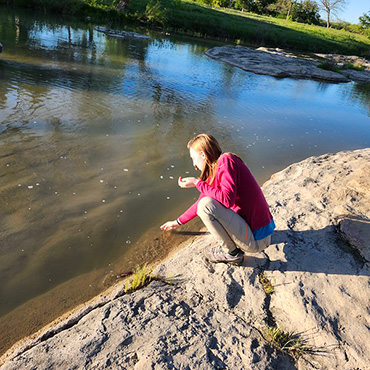
The Robert L. Bolin Graduate School of Geology offers an MS in Geosciences, with coursework and research opportunities. Both the thesis and non-thesis options require a research component (the latter requires a work-internship and additional course hours).. Students may specialize in:
- Paleontology, Sedimentology, Stratigraphy (Rosscoe)
- Remote Sensing & Geospatial Science (Mahmud)
- Tectonic and Environmental Geophysics (Emishaw)
- Igneous Petrology & Geochemistry (Price)
Degree Requirements:
- 31 credits, with six in thesis research, or,
- 36 credits with a three-hour research effort and three-hour internship
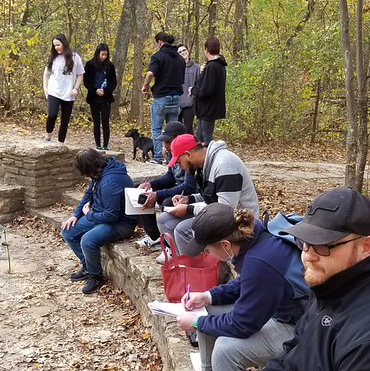
Once you are in sight of completing all of your non-geosciences requirements, you may choose to pursue your masters in geosciences as you complete your undergraduate. Engage thesis research your fourth year and complete graduate coursework rapidly to receive both degrees within five years.
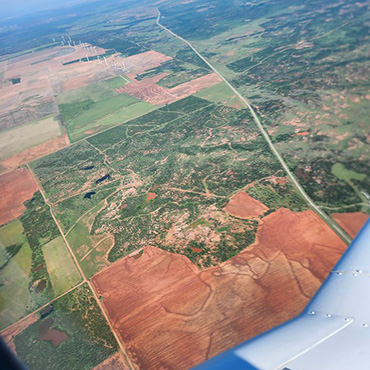
The post-baccalaureate certificate in GIS provides an in-depth exposure to computer applications and programming techniques, fostering an expertise in modern geolocation, mapping, and geospatial databases. It can stand alone or form a backbone of coursework for an M.S. in Geosciences.
What Can I Do With a Geosciences Degree?
Career paths include:- Petroleum Geologist
- Paleontologist
- Hydrogeologist
- Environmental Scientist
- Geophysicist
- Geochemist
- Geohazards technician
- Remote Sensing Specialist
- Resource Manager
- Geospatial Scientist
- Environmental Consultant
- Parks and Wildlife Ranger
- Minerals and Materials Exploration Scientist
- Educator
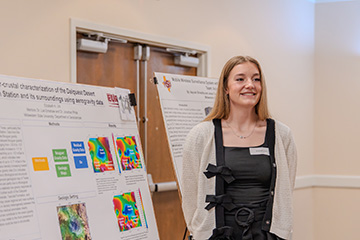
Undergraduate and Graduate Research
Undergraduate Research: Opportunities through UGROW, EURECA, independent study courses, and volunteer engagement. Undergraduates are encouraged to engage our faculty and develop projects of interest.
Graduate Research: Students complete an original research project under faculty mentorship, with opportunities for publication.
Discovery is central to our program. Students engage in research in:
- Petroleum Geology
- Geophysics
- Hydrogeology
- Environmental Geology
- Petrology & Geochemistry
Areas of Faculty Expertise
- Dr. Luel Emishaw: Potential fields geophysics applied over varied scales, from rifting in east Africa, to assessing near-surface attributes, such as aquifers and underground storage.
- Dr. Kashif Mahmud: Remote sensing and applications in hydrogeology, computational science, environmental assessment, terrestrial carbon cycle, and climate change modeling.
- Dr. Jonathan D. Price: Petrology and geochemistry, magmatism, volcanism, mineral growth, field mapping, and geochemical modeling.
- Dr. Steven Rosscoe: Paleontology (specializing in conodonts, but including other organisms), surface and subsurface stratigraphy, and sedimentology.
Academic Advising for Geosciences Majors
Work with McCoy College academic counselor Ms. Melissa Laussmann to start your journey, plan courses, and explore degree tracks. As you advance, your faculty academic advisor will prepare for graduate study or careers.

Peer-Led Support and Training
TASP's Learning Center (TLC): Drop-in and group tutoring in Writing, Math, Science and more. Located on the first floor of Moffett Library.
Departmental Tutoring: The Geosciences program provides additional subject-specific tutoring. See the Tutoring @ MSU tab in the portal.
Student Organizations
American Association of Petroleum Geologists (AAPG)

International professional and student organization supporting geoscientists, especially in energy exploration.
Environmental Student Organization (ESO)

Promotes responsible environmental practices and green initiatives.
Geosciences Club (GSC)
Hosts the Rock, Mineral & Fossil Sale, organizes field trips, produces research, and engages in community service.
Sigma Gamma Epsilon (∑ΓΕ)

National honor society for geoscience majors, recognizing academic excellence and organizing program-wide activities.
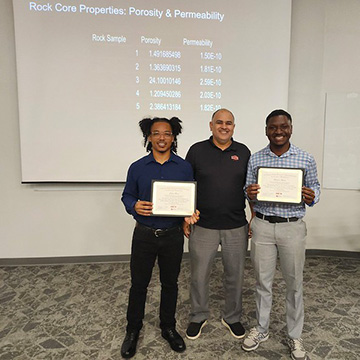
Community & Outreach
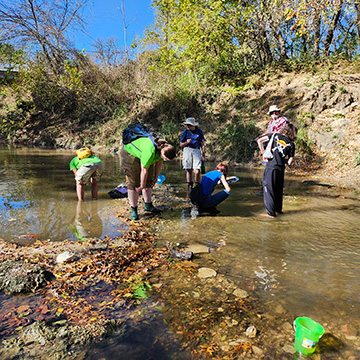
Internships
Scholarships
The Kimbell School of Geosciences provides multiple scholarships, including endowed and recurring awards, summer study support, field camp scholarships, and competitive graduate fellowships. Highlights include:
- Borders Scholarship
- Desk and Derrick Club of Wichita Falls Scholarship
- Multiple endowed scholarships
- Graduate Merit Scholarship
- Graduate Academic Scholarship
- External scholarships from national organizations
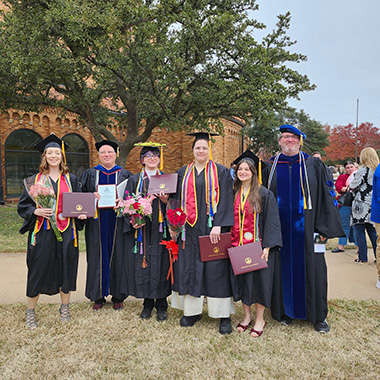
Our Alumni
Graduates work in industry, government, academia, and research across the U.S. and internationally. Many are leaders in petroleum exploration, environmental science, geophysics, and consulting. Many have pursued advanced degrees at prestigious programs. Our alumni generously support our current students and offer unparalleled opportunities for internship, employment, and networking.
Hours of Operation
Monday - Friday
8:00 AM - 5:00 PM
We are located in Bolin Hall
(Building 5 on the Campus Map)
Campus Map
Have Questions?
Jonathan D. Price ChairKimbell School of Geosciences geology.program@msutexas.edu (940) 397-4250 (940) 397-4898