Major in Chemistry or Geosciences with a Water Science Concentration
An environmental science or chemistry degree with a water science concentration equips individuals with the knowledge and skills needed to address complex environmental challenges and contribute to the sustainable management of our planet's water quality, supply, and distribution.
A water science focus is an interdisciplinary approach of relevant geology, chemistry, and biology courses that provide lab skills to address challenges related to local ecosystems, conservation, municipal water supplies, lakes and streams in an ever-changing environment.
With the increasing demand for clean water both nationally and internationally, this degree provides students with career opportunities with global relevance.
BS, Geosciences Track - Environmental Science Track Option D
BS, Chemistry Track - Chemistry, Option E
What can I do with a Water Science concentration?
- Contaminant monitoring and mitigation
- Environmental water research
- Quality control
- Waste water management and epidemiology
- Water resource management
Internships
For those that qualify, the City of Wichita Falls has paid internships to add experience and possible publications to your education.
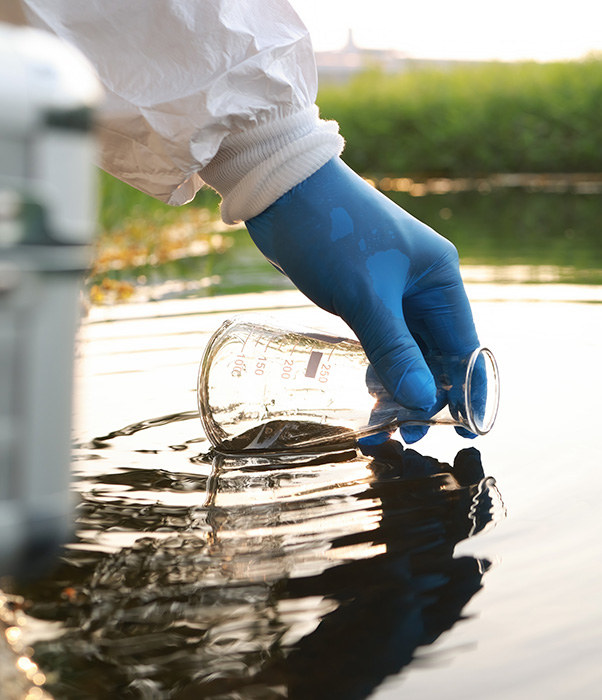
The City of Wichita Falls offers unpaid internships year-round, and paid internships during the summer. Openings are available in the Cypress Environmental Laboratory, which focus on Safe Drinking Water Act compliance including surface water, tap water, and wastewater effluent testing, and in the Resource Recovery Laboratory, which focus on Clean Water Act compliance and treatment plant process control analyses. Interns will perform field collections and learn basic microbiological and chemical testing, quality control data analysis, and instrumentation.
Publications
- Academia-Industry Collaboration: Water Chemistry and Environmental Education, J. Chem. Ed.
- Hunter Adams* Candice Sharp Fulton, Mark Southard, Jianguo Shao, Sam Reeder, Jonathan Price, Emily Appleton, Chris Hansen, Ben Colvin, Kashif, Mahmud, Daniel Nix, James Masuoka, Monica Odlare, Keisuke Ikehata (July, 2025)
- Promote Water Industry Careers Through Academic Collaborations J. AWWA
- Hunter Adams, Candice Sharp Fulton, Dave Thomas, Daria Dilparic, Sathya S. Ganegoda, Gary A. Burlingame, Andrea M. Dietrich, Daniel K. Nix, and Keisuke Ikehata (February, 2025)
- Industry Workforce Development: The Value of Internships, Journal AWWA 114(7): 54-61.
- Adams H, Reeder S, Appleton E, Thomas D, Southard M. (2022)
- The Effect of pH on Taste and Odor Production and Control of Drinking Water. AQUA-Water Infrastructure, Ecosystems and Society. 71(11): 1279-1290.
- Adams H, Burlingame G, Ikehata K, Furatian L, Suffet IH. (2022)
- New Production Pathway of Musty 2,4,6-Tribromoanisole During Raw Water Disinfection Processes at a Sufrace Water Treatment Plant. Water Supply. 23(11): 4416-4424.
- Adams H, Pochiraju S, Ikehata K, Southard M, Reeder S, Appleton E, Nix D. (2023)
- Measuring the Efectiveness of an Algae Bloom, T&O, and Cyanotoxin Monitoring Program. Water Practice & Technology. 18(12): 3021-3034.
- Adams H, Southard M, Reeder S, Appleton E, Nix D. (2023)
- 4-H20 Leadership Academies | Texas 4-H Water Ambassadors Program
- Each summer, newly-selected and veteran water ambassadors embark on week-long tours throughout Texas to experience its vast diversity of water resources and water isssues. Tehse tours, or 4-H2O Leadership Academies, allow youth to strenghten their understanding of the value of water to different regions of the state. Each year of service presents ambassadors to tour a different region and range of water issues. Youth who begin the program as a high school freshman, for example, can expereice all four summer academies (Tier I - Tier IV).
- Helping Kids Succeed | 4-H STEM Programs
- 4‑H STEM programs provide kids opportunities to learn about Science, Technology, Engineering and Math (STEM) through hands-on projects.